Extra Credit: Victor Papanek and Ergonomics

Victor Papanek is known as an activist, writer, and designer who made history. He was one of the first to discover issues of sustainable and social design in the 1960’s.

Social design is design that seeks to solve humanitarian issues such as improving living conditions for its beneficiaries.

He used to also design radios and televisions for African American countries, electric vehicles, and the Fingermajig (an object designed to stimulate the sense of touch), just to name a few…
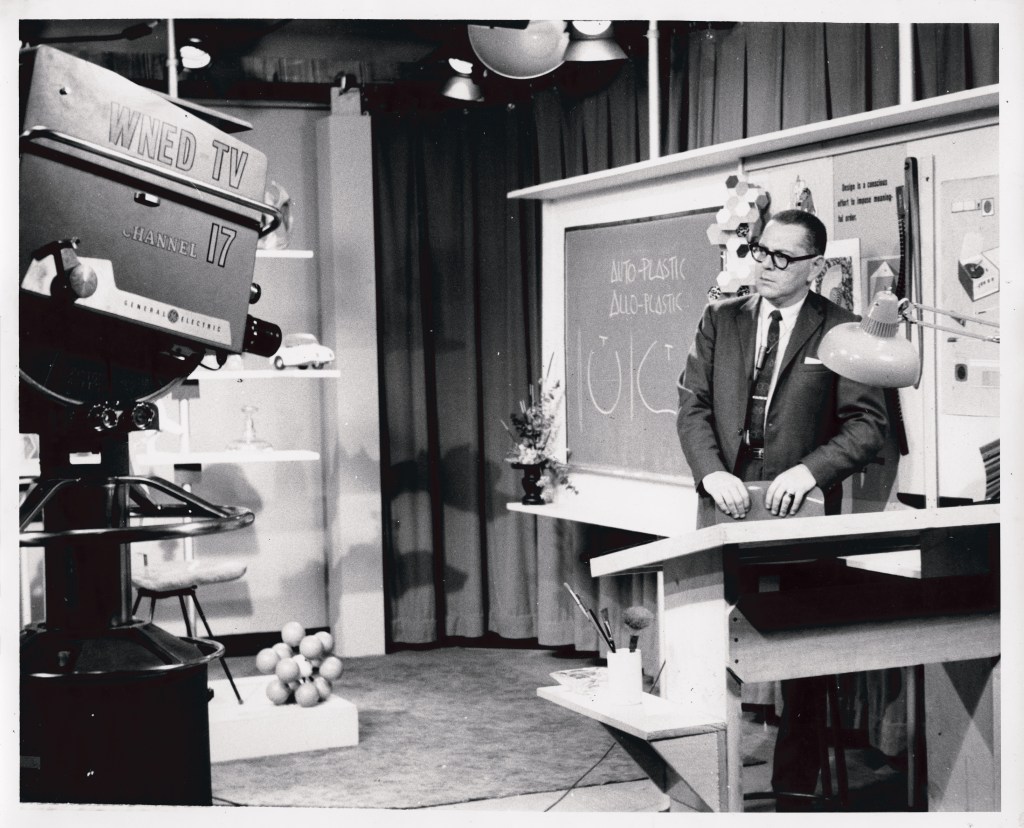
Victor Papanek on the set of Design Dimensions, a show on WNED-TV Channel 17, Buffalo, NY (1961-1963) © University of Applied Arts Vienna, Victor J. Papanek Foundation

Papanek also took the time to focus on researching about ergonomics. He touched upon this in his seminal article, “The Future Isn’t What It Used To Be” and mentioned his concerns about the negative impact created by the high-tech industry in each product and service offered.

His greatest concern was, ““…such methods lead to reductionism and frequently results in sterility and the sort of high-tech functionalism.”

– Victor Papanek

Human- Centered Action Research

Now, his work has led designers to today’s awareness and understanding how our brain connects with our emotions, thoughts, and personal experiences from multiple perspectives.
Extra Credit: Henry Dreyfuss and Ergonomics

Henry Dreyfuss is known as one of the best American Industrial Designers and an important theorist in the field of ergonomics. He got his start at age 17 by designing sets for Broadway shows. Then in 1927, he was commissioned by a store to study merchandise. While he was studying, he would make drawings by showing where manufactures can improve.

” The proper way to approach design was to work directly with the manufacturer from the start rather than to try to improve a design after the product had been made.”

– Henry Dreyfuss

Brittanica

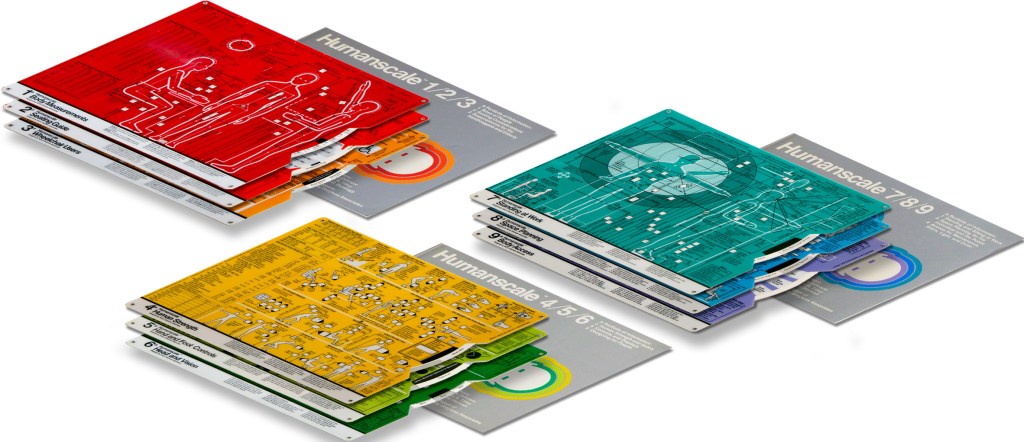
He designs “stress utility” and mentions this further in his book, The Measure of Man. Starting in 2017, designers collect the ergonomic reference charts and data selectors which Dreyfuss created. The charts depict measurements of the human body and how it relates to its surrounding space.

Dee Zeen

Designers are inspired by Dreyfuss and his studies to create more human scale books for human comfort.

AI Designs for Humans

Artificial Intelligence (AI) refers to the simulation of human intelligence in machines that are programmed to think like humans and mimic their actions (Investopedia). AI also helps humans with problem solving and learning.

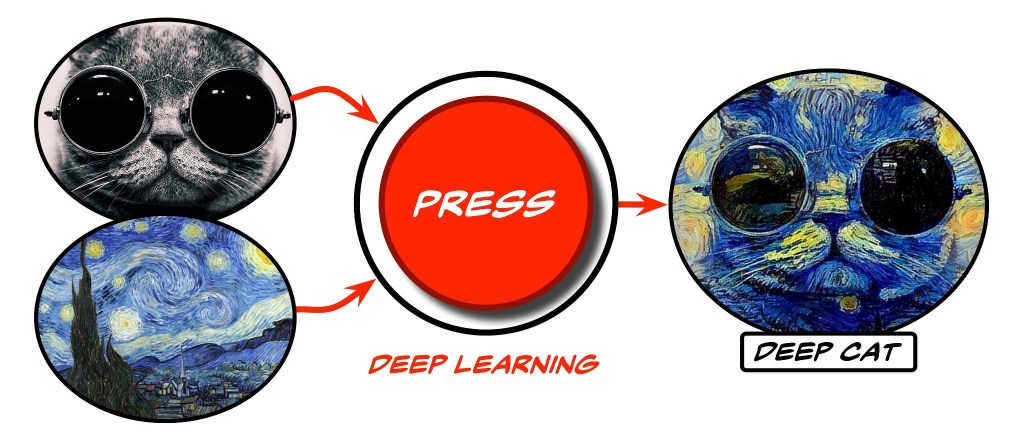
AI is now used in many applications. Stanford University showed that there is an application where AI is being used or described as “a big red button.” With AI, the user can choose two images of interest and push the red button to have an imaged be combined. See below:

Credits to Stanford University

The design is called, “Deep Cat.” It is a combination of the cat in sunglasses with Van Gogh’s “Starry Night” iconic painting.

Now you may ask, how do these images get put together and what exactly does the Big Red Button (BRB) do?

The BRB actually helps to stop AI from causing harm. Google said that, “The method created by the researches goes a step further by making sure the AI does not prevent itself from being interrupted by humans.”

In 2016, Google helped to create the BRB which universities such as Stanford and Oxford have found to be beneficial.

It is important that human operators are able to halt the AI from continuing “a harmful sequence of actions” and lead it to a safer situation with the creation of the BRB.

Nicole Barth

Nicole Barth- Hofstra University

Nicole Barth graduated Hofstra University in 2005 as a fine-arts graduate. Before she graduated, she originally wanted to pursue a career for in design for print books and magazines, but then that changed as she explored the world of digital publications. She was inspired to start a career in art because of Professor Thomas Klinkowstein and his love for technology.

After college, her career skyrocketed. She co-founded an award-winning firm called, Ronik which uses art and emerging technologies to create interactive experiences for clients and their customers. Her work for Ronik is currently displayed at GE Healthcare, FastCompany, Benjamin Moore, Nike and Nasdaq.

Not only has she founded Ronik, but she has worked for other famous companies such as Refinery29, The Food Network, and Code and Theory. These companies have allowed her the opportunity to become her own boss and a successful businesswoman.

Hofstra is proud to say that Nicole is an alumna of the pride and congratulations on all of your success, Nicole.

About Universal Design

In 1990, the Americans with Disabilities Act (ADA) set out a clear prohibition of discrimination based on disability. When buildings became a challenge to access, they shut people out of public places. Therefore, the built environment can be a form of discrimination.  If a place is accessible, usable, and convenient, people with disabilities benefit.

What exactly is Universal Design?

It is the design and composition of an environment. The environment should be designed to meet all human needs of the people that choose to go there. Universal Design creates services, products, and environments that pleases people.

In the 90’s, a team of experts from NC State University released a guide for Universal Design and its principles.

The 8 goals of Universal Design are:

  • Body fit: building for the full range of human body sizes.
  • Comfort: don’t create an overly demanding environment.
  • Awareness: use different modes to communicate information effectively.
  • Understanding: make sure the environment is clear, unambiguous, and intuitive to use.
  • Wellness: promote people’s health and prevent injury.
  • Social integration: ensure everyone is invited into the public sphere equally.
  • Personalization: allow people to personalize their experience.
  • Cultural appropriateness: respect the context of any design project.

https://www.reliance-foundry.com/blog/universal-design#gref

BROOKS CHURCH

About Ergonomics

What exactly is ergonomics?

Ergonomics is defined as the “scientific study of human work.” When we speak of ergonomics we can break it down to three primary studies; physical, cognitive and organizational. It explores the necessary elements needed to ensure that one is void of any hazardous issues that would make it difficult to work up to ones potential.

There are many benefits to an ergonomically sound work environment. Most people have to adjust to their specific working environments, which can lead to many distractions that make it hard to function. If you are not comfortable in your chair, desk, or workspace you might exhibit fatigue which may cause you to work at a slower less desirable speed. When the needs of employees are addressed, you will find that absenteeism decreases, and production increases. It will enhance the quality of their work, and reduce stress, resulting in a positive work place.

https://www.tandfonline.com/doi/full/10.1080/00140139.2012.661087?casa_token=gNsqketb_vIAAAAA%3A25c0hUc2OFFe63QPPg0J2n577psM3xXeqeO4FutQgzP841JFArlscKcnowNFqGK9MiqLh8YD_PSRnw

FRANSICIAN HEALTH

Create your own website, free on WordPress.com.Create your own website.
Start free